In the circle of thermal imaging systems, the essential difference between the cooled type and the uncooled type is often simplified to “who is better”, but this dichotomy is not actually scientific. It all depends on the difference between detector technology and thermal management systems, which directly define the sensitivity of the device, the detection distance, and the operation and maintenance costs throughout its life cycle.
Cooled-type thermal imaging integrates a cooling system inside, which can lower the sensor temperature to a deep cooling level. This allows photon detectors to achieve extremely high sensitivity in the MWIR band, thereby achieving precise detection at ultra-long distances. In contrast, the uncooled type uses a microbolometer operating at room temperature and in the LWIR band. Although this solution is slightly inferior in ultimate sensitivity, it is more compact, cost-effective and maintenance-free, and fully covers the vast majority of commercial security, perimeter monitoring and industrial predictive maintenance scenarios.
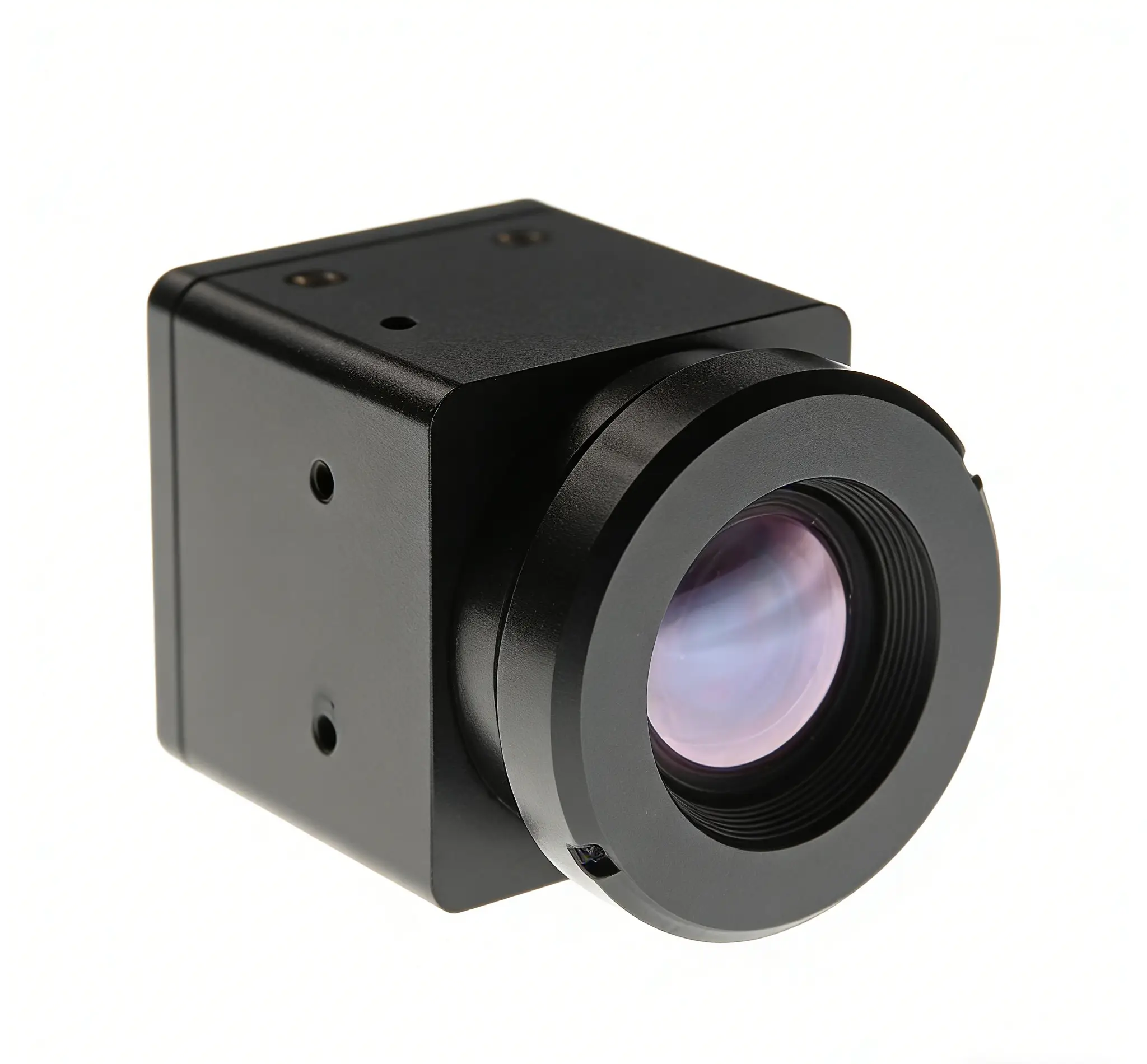
Detector Technology: Photon Detectors Vs. Micro Bolometer
To understand the difference between the two, you can’t just look at the specification sheet, you have to look at the physical principles.
Cooled type: These sensors are very sensitive to individual photons. But the problem is that thermal noise at room temperature can drown out these weak signals. So we have to introduce a cooling system to lower the sensor to a deep cold state. This allows it to capture subtle changes in thermal radiation with extreme speed and precision. This is synonymous with precision industry and extreme detection.
Uncooled type: The principle of this type of sensor is to measure the change in resistance caused by incident thermal energy. Since it is designed to work at room temperature, no auxiliary cooling is required at all. The simple and straightforward construction means it is extremely durable in everyday environments.
Working Band: MWIR Vs. LWIR
When choosing a band, be sure to combine it with your specific application scenario:
MWIR (Medium Wave Infrared, 3–5 μm): Home of the cooled camera. MWIR performs well in penetrating certain atmospheric conditions (such as high humidity environments) with extremely high contrast. This is also why we prefer MWIR in border security and long-distance military tracking.
LWIR (Long Wave Infrared, 8–14 μm): A uncooled field. For most ground temperature measurement and security monitoring, LWIR is the industry standard, providing stable and consistent images under various standard environmental conditions, and is extremely cost-effective.
Performance And DRI Capabilities
When making technical solutions, you must reverse the configuration according to your DRI (Detection, Recognition, Identification) requirements:
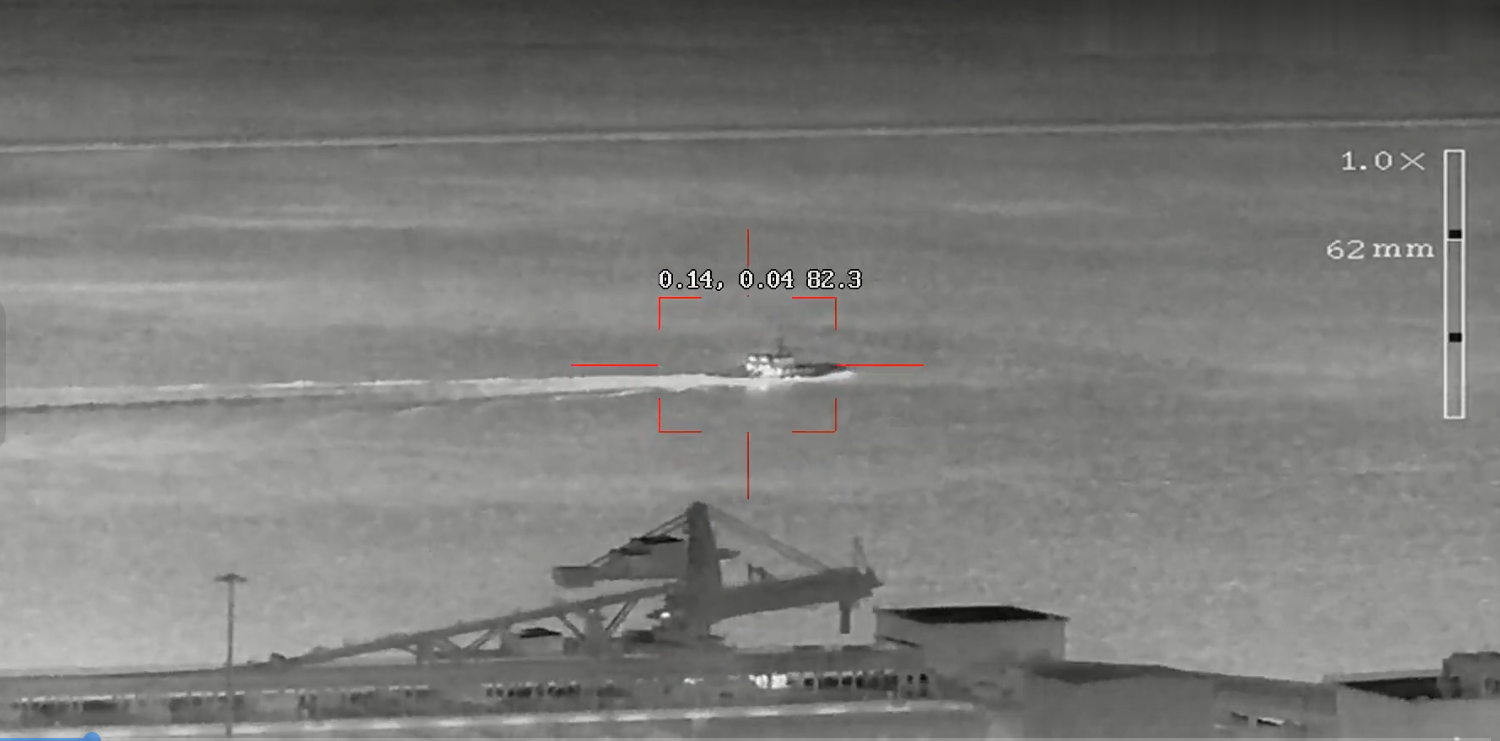
Ultra-long-range detection: If your project needs to identify targets several kilometers away, cooled type is the only option. Thanks to its excellent NETD, even extremely weak thermal contrasts can be clearly presented, which is a hard threshold for performing mission-level critical tasks.
Standard Security and Inspection: For perimeter protection, facility monitoring, distribution cabinets, and mechanical wear detection, the uncooled type is more than sufficient. The image quality provided by modern microbolometers can fully meet 90% of commercial and industrial field needs. There is no need to pay for “overflow” performance.
Maintenance And Operating Costs
Full lifecycle cost is the core driver of decision-making:
Maintenance-free advantages: The uncooled type is a solid-state device without any moving parts. This means that you have little to worry about maintenance issues throughout the product cycle, which is a lot less worry.
The Price of a cooling system: Cooled cameras are indeed masterpieces of sophisticated mechanical engineering, but the cooling system itself is a moving part with a lifespan. It requires regular maintenance and must be replaced after a certain number of years. This is not only equipment procurement, but also a heavy asset investment for long-term operation and maintenance.
How To Choose?
To summarize, this is not a “good vs. bad question”, but a “matching question”:
If your scenario is: Extreme long-range defense, border surveillance, or cutting-edge scientific research, where every millikelvin of sensitivity is crucial, then choose the cooled type.
If your scenario is: commercial security, perimeter monitoring or daily industrial thermal imaging inspection, and you need a reliable, cost-effective and worry-free solution, then choose the uncooled type.
At Bit-CCTV, what we do best is help our customers find that balance between performance and budget. If you haven’t decided which technology is best for your project, feel free to contact our team. Let’s review the technical indicators and decide the safest plan.
Author: Alex Chen
I am a senior thermal imaging consultant with over a decade of experience in electro-optical systems. I have focused on bridging the gap between complex infrared physics and practical industrial applications. My passion lies in helping businesses navigate the technical intricacies of detection technologies to deploy cost-effective, high-performance security and monitoring solutions.



 English
 日本語
日本語 한국어
한국어 français
 Deutsch
 Español
 italiano
 русский
 português
 العربية
 tiếng việt
 ไทย
ไทย čeština
 dansk
dansk Svenska