The English term "15kg pan tilt" usually refers to a horizontal pitch positioning mechanism with a maximum top load of 15kg in gimbal and security equipment selection. It describes a load level, not a specific model. When it comes time to purchase, products in the same 15 kg range may have several structural forms, with different movement ranges, speeds, power supplies and interfaces. You can't just rely on one number to get a seat.
Pan refers to horizontal rotation about the vertical axis, and Tilt refers to pitch rotation about the horizontal axis. The two-dimensional gimbal combines these two motion axes into the same positioning mechanism. There is also a single-axis horizontal turntable that only rotates horizontally and does not pitch. Both may have the figure of 15 kg in the specification sheet, but the tasks they undertake are completely different. Therefore, before choosing a model, you must first confirm whether you want a two-axis mechanism that adds horizontal pitch or a single-axis mechanism that only requires horizontal rotation.
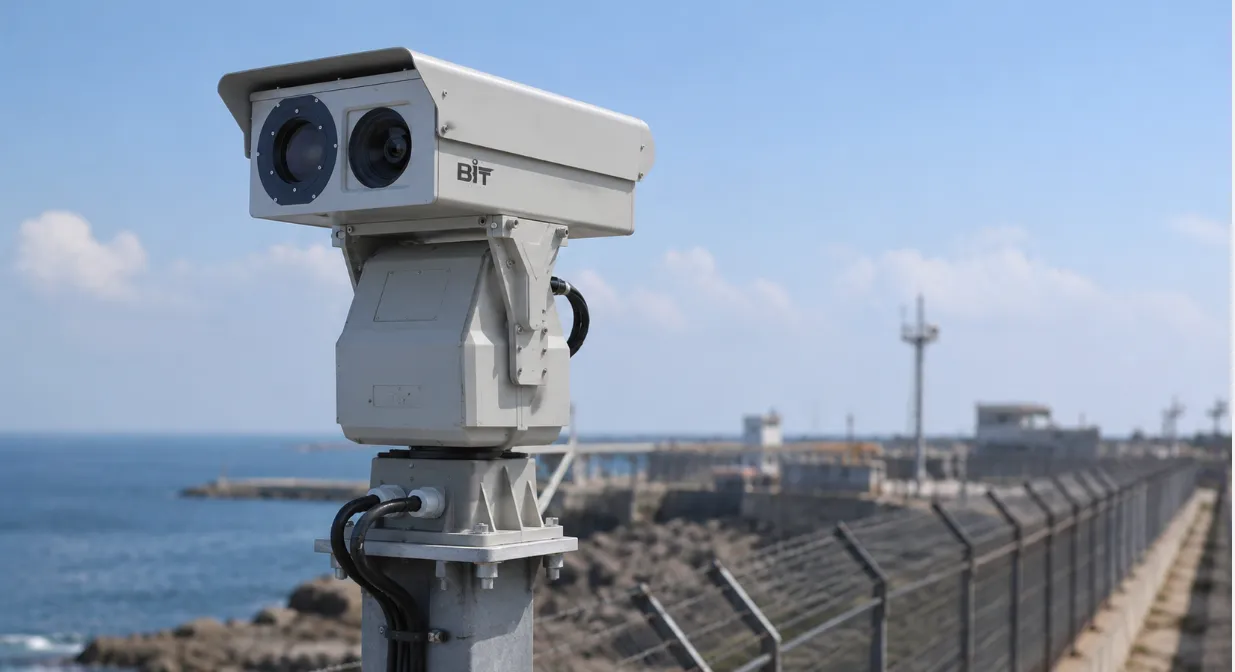
What Equipment Types Can Be Matched With 15 Kg
In a two-dimensional gimbal, a load capacity of 15 kg is usually placed in the medium gear. Common medium-sized outdoor variable speed gimbal, some models have a maximum top load of 15 kg, continuous 360-degree rotation in the horizontal direction, pitch range from negative 75 degrees to positive 40 degrees, horizontal speed up to about 60 degrees per second, pitch up to about 30 degrees per second, supports 200 preset positions, preset accuracy is plus or minus 0.1 degrees, communication interface is RS485, Optional RS422 or network interface. Another model in the same gear also has a load of 15 kg, but the pitch range is only from negative 45 degrees to positive 40 degrees, with a horizontal top speed of about 20 degrees per second and a pitch maximum of about 10 degrees per second. At the same weight of 15 kg, the difference in range of motion and speed is already quite obvious.
If only horizontal rotation is required, a single-axis horizontal turntable also has a model with a maximum top load of 15 kg. It rotates continuously 360 degrees horizontally, with a speed ranging from 0.01 degrees to 30 degrees per second, a presetting accuracy of plus or minus 0.1 degrees, supports 255 preset positions, uses worm gear transmission, and the entire machine weighs only a few kilograms. Put it together with the 2D gimbal of the previous type, and you can see that 15kg pan tilt cannot automatically point to a certain type of device.
Kilograms Are Just The Starting Point, Torque And Inertia Are The Key
The difficulty in selecting a model is often not in looking up the table, but in calculating your actual load first. The first step is to list all the parts that move along with the horizontal and pitch axes, including the camera, lens, shield, connectors, and cables, noting their mass and center of gravity. Top-mount and side-mount are two different installation methods. The allowable load of the same gimbal in the two methods may not be the same, and the current operating conditions cannot be matched by the rating of the other installation method. The additional tension and resistance caused by connectors such as cables and hoses should also be taken into account.
After the mass is determined, the torque and moment of inertia must also be calculated. Knowing only the total weight does not determine how much torque is needed for acceleration and braking. The torque is calculated based on the load weight and the distance from the center of gravity to the rotating shaft, and the moment of inertia is calculated based on the mass distribution and bias distance, so that it can be compared with the allowable torque of each shaft and bearing of the gimbal. Outdoor or vehicle-mounted scenarios also take into account wind loads, platform motion, impact, and vibration, which cannot be automatically covered by a static load label.
From 25kg To 100kg, Why Can't We Just Sort By Number
Pull the field of view away from the 15kg pan tilt and you will see larger load levels such as 25kg pan tilt and 100kg pan tilt. These numbers are larger than one, but the selection logic is consistent and cannot be arranged by kilograms alone. The higher the load level, the more we need to return to the combined conditions of torque, center of gravity, speed and acceleration to judge. It cannot be assumed that a large number is necessarily appropriate.
One noteworthy phenomenon is that the pitch range of the same heavy-duty gimbal varies with the top load. For example, a heavy-duty gimbal with a top load of 50 kg has a pitch range of plus or minus 45 degrees under a 50 kg load, plus or minus 60 degrees under a 40 kg load, and plus or minus 80 degrees under a 26 kg load. In other words, when the load is pressed in the middle gear up or down to 25kg, the available angular range may actually be wider. This illustrates from another perspective that there is a dynamic relationship between load figures and motion capability, and specifications cannot be viewed in isolation from the load.
Verification Of Interfaces, Power Supply And Environment
In addition to mechanical load-bearing, the interface and environment must also be clearly understood. For power supply, check the allowable range of input voltage and the upper limit of power consumption; for communication, confirm whether it is RS485, RS422 or network interface; whether the control protocol is Pelco P or Pelco D; and whether the baud rate and address settings match the existing controller. The capabilities of presetting, cruising, scanning, and position feedback are independent options and should be confirmed item by item. Don't assume that all of them are available just because the product name contains these words.
Installation should also not be ignored. The load-bearing capacity of the gimbal mounting walls and supports is generally recommended to meet the safety requirement of 4 times the total weight of the entire equipment. The protection level, operating temperature, humidity and condensation conditions must also be consistent with the actual usage environment. Only by clearly listing these conditions can the selection conclusion be verifiable.
A Verifiable Checklist
To summarize the previous content, select a suitable 15kg pan-tilt gimbal. You can follow these steps: First, list the mass and center of gravity of all follower components and determine whether to install it on the top or side; then calculate the torque and moment of inertia, and add wind load and impact if necessary; then determine the required level and pitch range, speed, Acceleration and positioning accuracy; then verify the interface capabilities such as power supply, communication protocol, presetting and cruise; finally compare candidate models under the same installation method, the same center of gravity and the same speed conditions, and complete the full-trip test under actual load and actual environment.
By adding these conditions behind the figures, 15kg is no longer just a dry load label, but a complete set of judgment criteria that can guide procurement.



 English
 日本語
日本語 한국어
한국어 français
 Deutsch
 Español
 italiano
 русский
 português
 العربية
 tiếng việt
 ไทย
ไทย čeština
 dansk
dansk Svenska