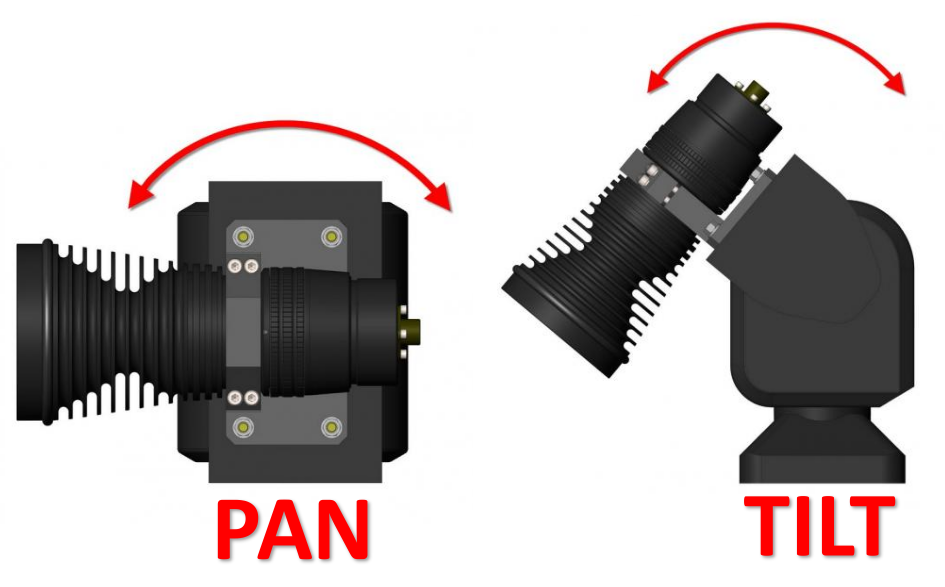
When we talk about “Pan and Tilt” (pan and tilt rotation) in CCTV cameras, from the most basic level, it refers to the electromechanical mechanism that allows the device to move in two specific axes: “Pan” controls horizontal rotation (left and right scan), while “” Tilt “”is responsible for vertical movement (up and down pitch). This seems simple, but in fact this dual-axis motion is essential to maximize the field of view (FOV). Through this mechanism, a single camera can achieve 360-degree full coverage, which can effectively eliminate the blind area that must exist in a fixed position.
In professional security monitoring systems, the Pan and Tilt unit is not only responsible for “moving”, it is usually driven by a precision motor and is originally designed to carry a specific load-such as a heavy telephoto lens or a multi-sensor thermal imager. Moreover, these actions are remotely controlled via standard protocols such as ONVIF or Pelco-D, enabling automated motion tracking and perimeter security.
The Mechanics Behind The Movement
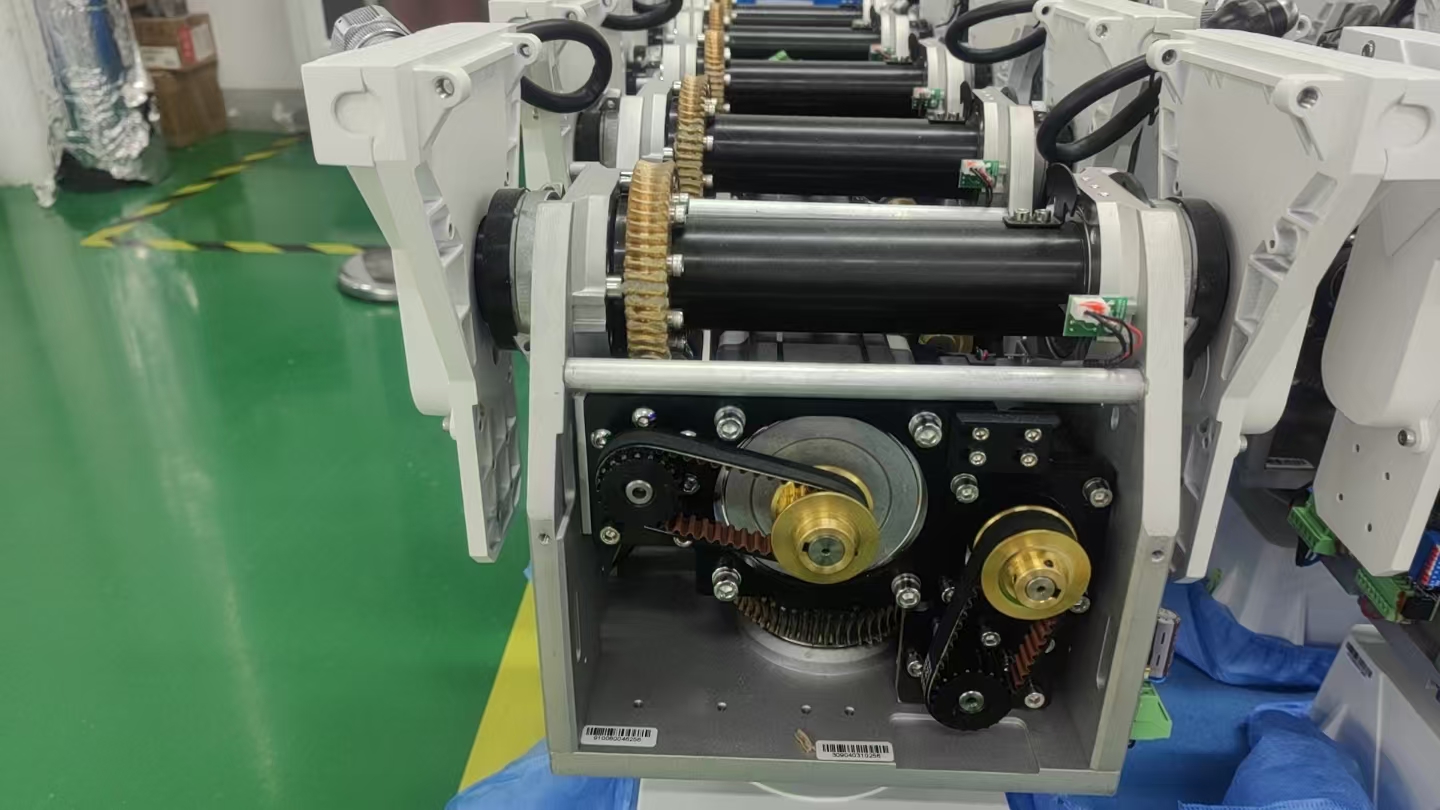
In industrial and high-security applications, this mechanism is not the plastic gear set you see in a home Consumer-grade PTZ, but a solid PTU or positioner.
Pan Axis: This mechanism allows the camera to rotate around a central axis. Usually we require a continuous rotation of 0 ° to 360 °. Here is a key point. High-end devices will use conductive slip rings to prevent cable entanglement. When doing the project, if the device needs to perform uninterrupted 360-degree perimeter scanning, this design that supports “infinite rotation” is a must.
Tilt Axis: This controls the angle of elevation, allowing the camera to see both the sky and the earth. Depending on the design of the enclosure-such as top-load or side-load-the pitch range will vary. Usually the range is between -90 ° and 90 °, which is critical for monitoring complex vertical terrain (such as mountain borders or the height drop of port terminals).
Why Precision Motors Are Important
The quality of the PTZ system, in the final analysis, is determined by the motor technology. This involves the core difference between professional equipment and consumer products. The professional units we use in engineering usually adopt worm gear drive or high precision stepping/servo motor. These heavy-duty drive systems address two major pain points:
Holding Torque: This is extremely important in outdoor installations. When the equipment is installed on a vibrating structure such as a bridge or ship, or when encountering strong winds, the motor must be able to “lock” the camera to maintain absolute stability, and the picture cannot be shaken.
Positioning accuracy: If you are doing long-distance monitoring (such as with laser night vision or thermal imaging), even a slight angle deviation, projected to a few kilometers away will lead to a complete loss of the target. The professional Pan and Tilt unit can ensure the accuracy of the preset position and will not drift after many reciprocating movements.
Carrying Heavy And Multi-Sensor Loads
In the professional market, a key indicator to distinguish between “Integrated PTZ Dome” and “pan-tilt” is the carrying capacity. The ordinary Integrated PTZ Dome is integrated, while the independent Pan and Tilt positioner is born to mount customized equipment. To understand Pan and Tilt in CCTV, to a large extent, it is necessary to understand this load capacity-from light 5kg to heavy 80kg or even higher. This ability is primarily used:
Tele lens: such as the huge zoom lens used in border control.
Multi-sensor fusion: install visible light camera, thermal imager and laser supplementary light on the same unit at the same time.
Reinforced shields: In oil and gas or marine environments, we need to mount heavy explosion-proof or corrosion-proof enclosures.
Integration With Security Protocols
The “Pan and Tilt” function never exists in isolation, it is the physical executor of digital instructions. Things like Pelco-D/P (run RS485 bus) and ONVIF (run IP network) are languages that tell motors where to go. Modern PTZ units are already deeply integrated with intelligent software to perform more advanced tasks:
Auto-Tracking: The unit automatically adjusts the horizontal and vertical angles to follow moving objects (such as vehicles or intruders), always locking them in the center of the frame.
Patrol Scans: The system moves according to a pre-programmed coordinate sequence to continuously monitor a wide area. In fact, this one device does the work of multiple fixed cameras.
Conclusion
In short, when someone asks ” what is pan and tilt in CCTV camera “, the answer is much more than simple turn. It represents a complex electromechanical system that transforms static sensors into dynamic, intelligent monitoring tools. Whether at critical infrastructure, borders or hazardous industrial sites, Pan and Tilt units are the backbone of wide-area security, providing the range, load capacity and precision necessary to capture every detail.
Author:James Miller
“Hi, I’m a Senior Product Engineer. With over a decade of experience in rugged surveillance, I specialize in heavy-duty pan-tilt mechanics and multi-sensor integration for industrial security.”



 English
 日本語
日本語 한국어
한국어 français
 Deutsch
 Español
 italiano
 русский
 português
 العربية
 tiếng việt
 ไทย
ไทย čeština
 dansk
dansk Svenska