Pan Tilt Calibration is essentially an electromechanical initialization process in which a PTZ camera or a heavy-duty gimbal needs to synchronize the actual position of the physical motor with its internal software coordinate system. This operation is actually forcing the equipment to “re-homing”-that is, driving the stepper motor or servo system to find the physical reference point (we usually call it “zero position”).
This process relies on limit switches, magnetic sensors or absolute value encoders. Its core purpose is only one: to eliminate the “drift” error accumulated due to lost steps, backlash or external vibration. Otherwise, when you call the preset position, whether the camera can aim at the target depends on luck, and a few degrees in the monitoring screen may be a thousand miles away.
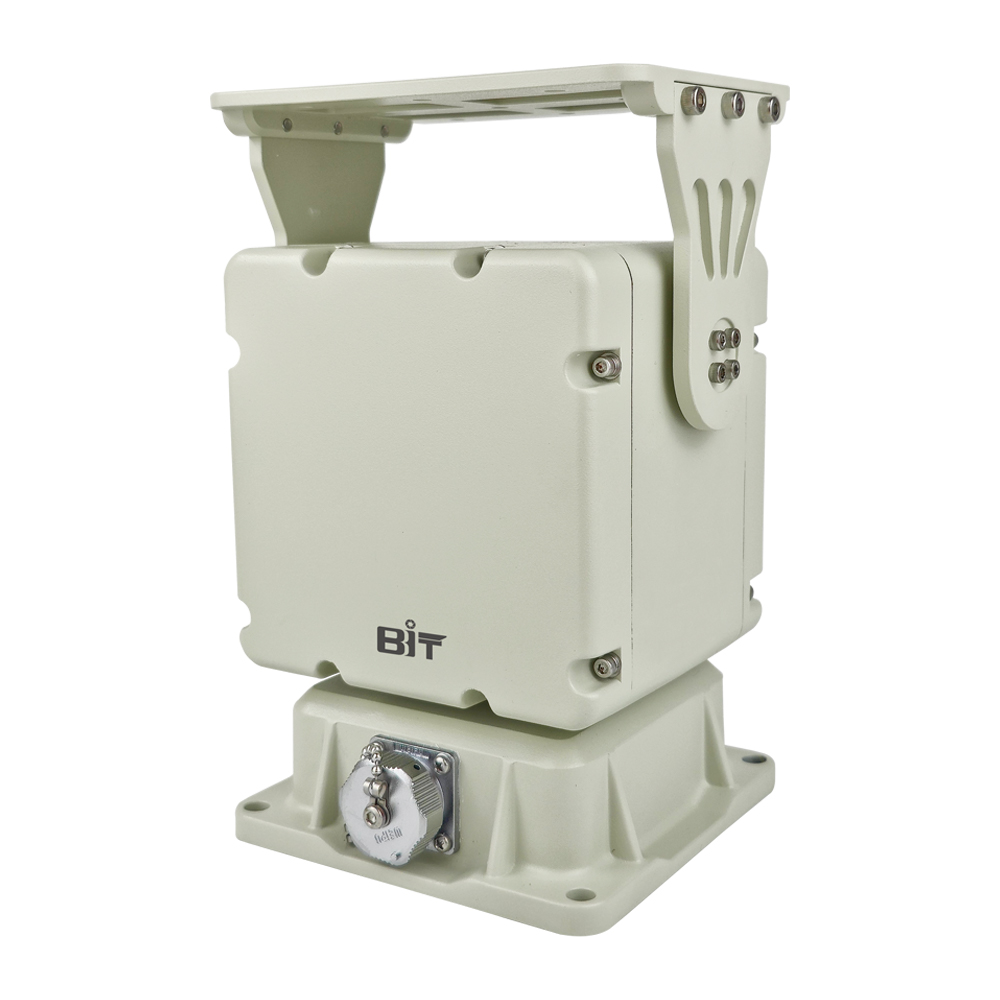
Mechanical Logic Of “Homing” And Synchronization
To understand what calibration is doing, you need to understand the disconnect between software logic and physical reality. The internal logic board of the PTZ device runs a perfect coordinate system (such as horizontal Pan: 0 ° to 360 °, vertical Tilt: -90 ° to 90 °).
But the problem is that when the device is powered on or restarted, the physical motor itself is “blind”-it doesn’t know where it is now. This must go through the “homing” process mentioned above once. During calibration, the motor drives the gimbal until a specific hardware signal is triggered. This action forcibly aligns the “0,0” coordinates at the physical hardware and software levels. If you don’t do this step of initialization, the software may think that the camera is pointing to the north (0 °), but in fact it may be facing the east (90 °), and all the control instructions behind it will be completely messed up.
Hardware Means Of Positioning “Zero”
It is important to see what hardware the equipment is implemented. The calibration behavior usually depends on the following technologies:
Limit switch: Many conventional PTZ units still use this old method. Turn the gimbal to the limit position during calibration until it physically hits a mechanical switch. This “hard stop” signal tells the motor controller “it’s over” to establish a specific reference point.
Magnetic sensor: A slightly more advanced device will use a non-contact magnetic sensor. When the gimbal rotates, the magnet sweeps the sensor on the base to trigger the signal. This is better than mechanical switches in that there is no physical wear, longer life, and lower maintenance costs.
Absolute encoder: On high-end heavy-duty PTZ, this is usually standard. Unlike the first two systems that have to “turn 1 circle to find a home”, the absolute value encoder can provide unique position data at each rotation angle. Although calibration logic is usually required in order to synchronize with software, its greatest advantage is that it can instantly restore its position after power failure and restart, and it does not need to perform a complete physical rotation self-test like a blind person touching an elephant.
Fighting “Drift”: Step Loss, Backlash And Vibration
The most troublesome thing to regularly perform or schedule PTZ calibration is to solve “drift”. Simply put, the accumulation of errors causes the camera to actually see the picture deviating from the coordinates it thinks it is looking. This deviation mainly stems from the 3 mechanical “stubborn disease”:
Step Loss: Especially in an open-loop stepper motor system, if the motor encounters resistance (such as a sudden gust of wind, or a cable stuck), the software does not know if it “loses” a step. The software thought it was taking steps, but the hardware didn’t actually move. After thousands of operations, this unrecorded error can accumulate very frightening.
Gear Lash: This refers to the small gap or “virtual position” between the gears in the transmission system “. When the gimbal changes direction, there will be a brief moment when the motor is turning but the gimbal does not move until the gears re-engage. Over time, this mechanical looseness will lead to more and more inaccurate positions.
External vibration: don’t underestimate the environmental impact. Heavy machinery passing by, wind loads on high poles, and even the vibration of nearby traffic will fine-tune the stationary positions of motors and gears, slowly shaking the equipment off the internal map.
Ensure The Accuracy Of Pre-position Calls
In the final analysis, the ultimate goal of the Pan Tilt Calibration is to ensure the reliability of the preset position. The preset position is a saved coordinate instruction (such as “zoom to see the gate”). If the equipment has accumulated drift due to the above reasons, it is meaningless to call the preset position-the camera should be aimed at the center of the gate, and the result may be three degrees off to shoot the brick wall next door.
By forcing the device to find a physical zero, the calibration operation directly zeroes the error counter. This ensures that the coordinate map of the software perfectly coincides with the physical world, ensuring that key security targets can be accurately captured every time an instruction is issued, rather than being a thousand miles away.
Author: David Chen
I’m a Senior Hardware Engineer specializing in surveillance mechanics. With over a decade of field experience, I focus on the electromechanical precision and maintenance of heavy-duty pan-tilt heads and PTZ camera systems.



 English
 日本語
日本語 한국어
한국어 français
 Deutsch
 Español
 italiano
 русский
 português
 العربية
 tiếng việt
 ไทย
ไทย čeština
 dansk
dansk Svenska