Many knowledgeable friends, when they saw that the monitoring probe could turn on its own, were filled with joy and thought that it would definitely kill “bite” suspicious people. To put it bluntly, those amazing “AI humanoid tracking gimbal cameras” on the market, if you want to use them for real, have to rely on a complete set of tightly sewn control chains behind your back: you have to first identify the person in the picture, then the system is firmly locked, and then quickly convert the picture position accurately into the rotation angle of the motor Finally, send the instructions to the machine to make it move. These four steps, but if the chain falls off at any step, the thing will die, which means it can be remotely controlled with a joystick “a big toy” and will not be able to hit the real automatic tracking eight rods.
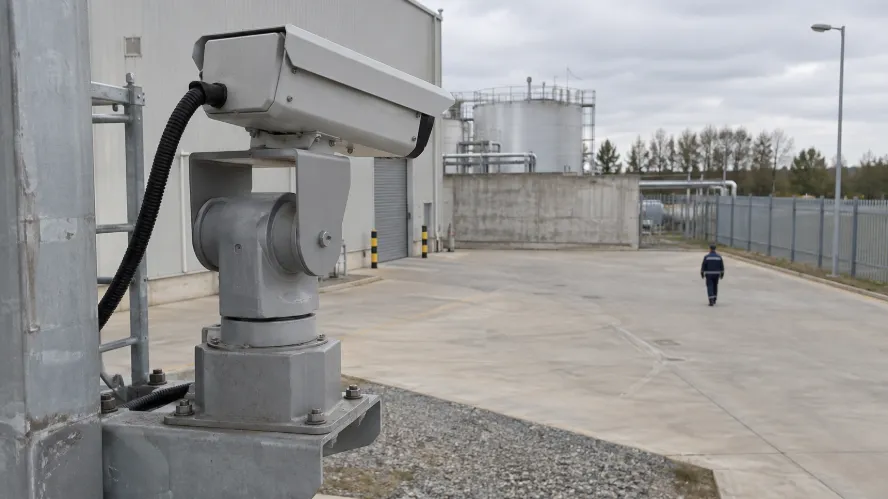
First, feel the bottom of the lens and gimbal
Everyone usually talks about PTZ. These three letters actually refer to horizontal rotation (Pan), nodding up and down (Tilt), and zooming in and out of the camera (Zoom). The integrated PTZ ball machines commonly found on the market now all have the lens, motor, and zoom module crammed into one housing. But there is another “building” way to play, which is to take a fixed bolt and put a two-dimensional gimbal under it. This type of assembly has its load-bearing capacity, power supply, communication and lens control, all calculated by splitting the two ends.
There is a pit here that must be avoided: if a machine can only turn up and down and left and right blindly, but the lens cannot automatically zoom in and out, then strictly according to the rules, it can only be called “Pan-tilt camera (Pan-tilt camera)”. Don't look at it and think it can twist its neck, so you can assume that it is proficient in all kinds of martial arts (PTZ).
Control logic may not be entirely within the device “belly”
Who is doing this hard labor of grabbing faces, picking at human figures, and calculating images? It could be running in the camera's own chip, thrown to the edge computing box next to it, or thrown to the VMS video platform on the back end, or even a dedicated AI server. Where the computing power is located has nothing to do with what the device is called or how much it costs.
Furthermore, if the bolt is equipped with an external gimbal, you often have to hold your nose to get the control protocols for the gimbal and lens separately. You want to just copy and hard-fit the ready-made protocol on the integrated ball machine and put it directly on the external gimbal? There are no doors.
There's another common sense pitfall here: being able to see the screen and being able to control the machine are completely different things. You can see high-definition surveillance footage on the screen, which at most means the video cable is connected; but whether your tracking algorithm can actually activate the machine depends on whether the manufacturer's control interface is open, whether the instructions are incomplete, and whether the lens and motor are coordinated well enough.
What is a real tracking closed loop?
Being able to draw a frame for someone walking by on the screen means they've just entered a door. The system must have real ability to accurately convert the coordinates in the picture into the physical angle of the gimbal motor, and must also be able to control the fast and slow rotation rhythm. You think, how about everyone stepping out of the picture? What if it's blocked by a big tree? What should I do if the gimbal moves to the dead corner of Kaba? When do we have to let the security guard take over manually? These are all the junk you have to cover when writing tracking logic.
If you are at the scene and see that gimbal going crazy there “shaking your head”, unable to catch up with people, or even running blindly in the opposite direction, don't start cursing right away “humanoid detection is inaccurate”. Frame drops, network delays, coordinate splitting, or the motor's control gain is not adjusted properly, there are dead zones, mechanical stuttering, or even even human figures are obscured ——as long as these hard-core underlying details are slightly flawed, the tracking effect will roll over every minute. The phrase "light and airy “supports AI”" in the manufacturer's brochure can fill in the holes that are not being dug by the underlying control.
If you follow a dead ring, that's not what you call “target tracking”
Today's machines always have a “pre-positioning” function, which is actually to save a few coordinates in advance and let it rotate; “automatic line scanning” is to let the gimbal swipe back and forth within the demarcated boundaries; “automatic cruise” is to check the pre-positions one by one in sequence; there is also one called “watch”, It means that the equipment has nothing to do when it is idle, and it starts cruising or line sweeping by itself. To put it bluntly, these are all rigid cutscenes that follow the script.
True “target-driven tracking” is something entirely from another dimension: it requires constant staring, constant locking, frantic coordinate calculations, and instantaneous control. If the manual only says it supports pre-positioning, line sweeping, cruising or watching, you should never hypnotize yourself. Brainstorming can help you recognize individuals and follow them all the way.
As soon as the lens turns, the original large field of view is lost
It is really refreshing to turn the gimbal and bite the target, and it can also zoom in to see the micro-expressions of the face. But you have to recognize a reality: once the lens is turned away or zoomed in, the large panoramic view it can cover is instantly lost. This is called losing one thing while caring about another.
If you want to control the overall situation without causing any chaos, but also want to keep a close eye on someone's small actions, the most reliable method is to use a combination of punches ——use a fixed bolt or panoramic camera to watch the big scene to the death and maintain the overall view; then mobilize the perspective of the gimbal to specifically “bite” the moving key target.



 English
 日本語
日本語 한국어
한국어 français
 Deutsch
 Español
 italiano
 русский
 português
 العربية
 tiếng việt
 ไทย
ไทย čeština
 dansk
dansk Svenska