When using a computer camera, the picture is often stuck in a fixed area. If you want to show everyone the whiteboard or the environment next to it, you can only break the camera by hand. At this point, if you have a camera with controlled level and pitch functions, you can directly adjust the orientation of the lens while sitting on the operating end; if combined with controllable zoom, the same camera position can switch back and forth between “looking at panoramic views over a wide area” and “looking closer to local details”. To put it bluntly, the framing can change whatever you want to show.
However, when we discuss benefits of pan tilt zoom ptz webcam computer camera, the core premise is: you have to see whether these actions can actually run on your own computer and commonly used software. Don't assume that just because a product has the letters “PTZ” in its name means it has a good zoom function, and don't assume that the software you're using will squeeze all its control functions out of it.
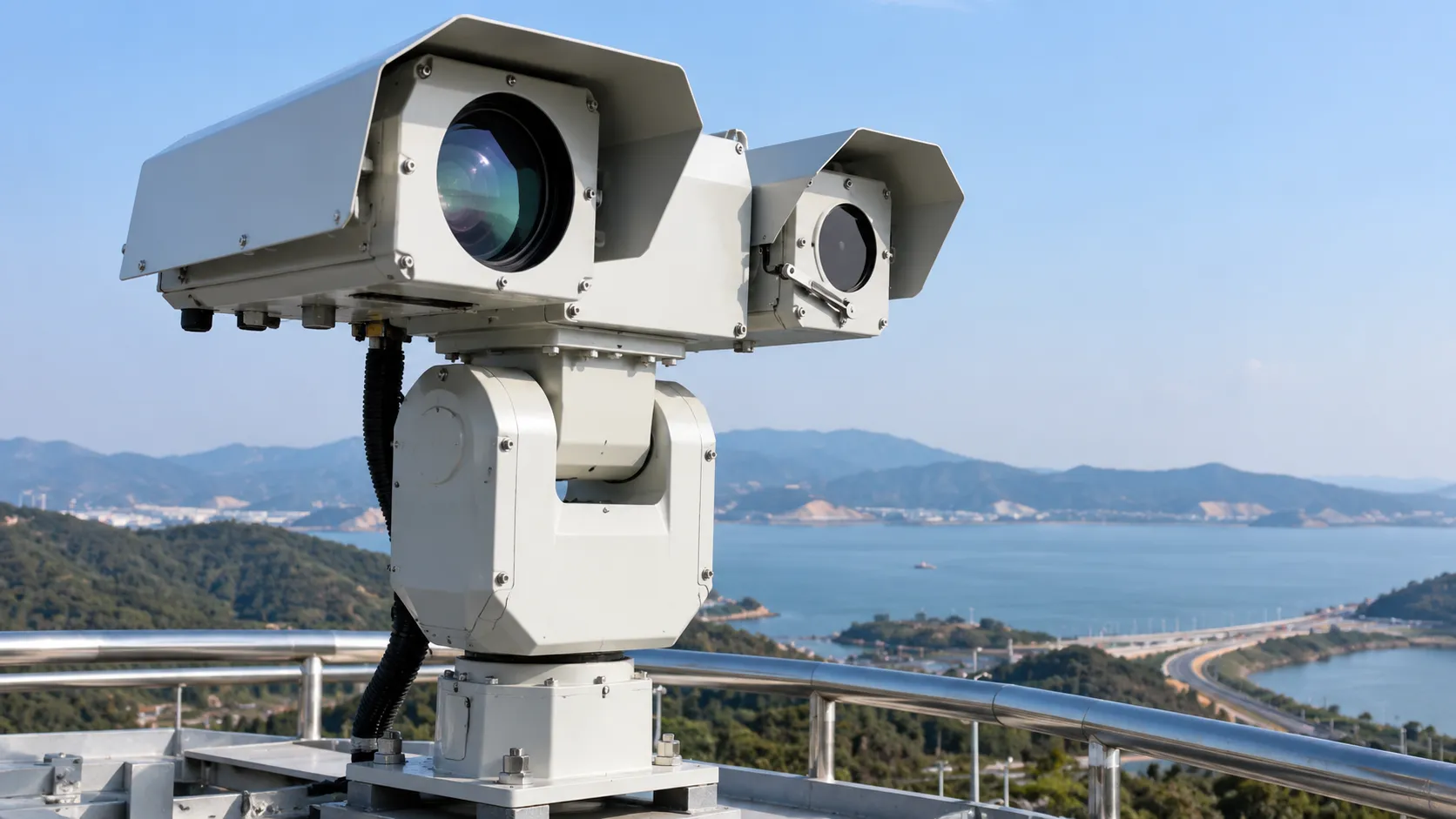
After the direction changes, the screen coverage will also change
P (Pan) and T (Tilt) are actually level and pitch, which solve the problem of “where the camera is looking”. With a controlled gimbal, you can remotely change direction from the computer. For use cases that require frequent reframing, this remote control capability is far more important than whether the machine has a physical joystick.
The zoom tube is a different matter. Once the camera is in the right direction, you can then change the size of the field of view to make the target appear larger or smaller in the frame. Only by combining directional control and zoom can we achieve the framing ability of cutting from overview to details with one click. Some devices on the market only have horizontal and pitch mechanisms, but the focal length is fixed. In fact, you can't just claim that you have complete PTZ functions based solely on “turning your head”.
Another thing to remind you is that once the camera is turned away or zoomed in, the area originally covered by the picture will naturally become invisible. If the task at hand requires you to focus on both panoramic and close-up shots, then that camera's back-and-forth motion is definitely not enough, because it always has only one current viewpoint. In this case, you will also need to equip a camera that can independently maintain a global overview.
Before zooming in, tell how big it gets
As everyone knows, the level and pitch of the machinery will make the camera actually rotate. But “digital PTZ” is different. In fact, the lens does not move at all, but only moves and cuts a certain area in the image that has already been taken. While both of these methods will change the composition you see on the screen, digital movement is ultimately limited by the physical boundaries of the original image and cannot force the image off-camera into it.
True optical zoom adjusts the field of view and image size by changing the physical focal length of the lens. Digital zoom relies entirely on cropping and magnification, and the limits of magnification are often stuck in the quality of the source image and the resolution of the output. So, don't get too excited when you see a zoom button on the software interface ——it's not enough to prove that your camera actually has optical zoom, let alone expect to be able to see details clearly after zooming in.
In another case, you might add an external 2D gimbal to the fixed camera. At this time, the gimbal is only responsible for horizontal and pitch control, and zoom must be performed by the camera's own lens. When controlling, you may have to split your troops into two separate operations. Simply adding an electric steering base to a fixed camera position will not magically automatically complete the lens zoom function for you.
Can common compositions be called again
Adjusting the position frequently is actually quite tedious, so devices that support “pre-positioning” are particularly useful. It can save your adjusted PTZ position configuration (including horizontal, pitch, and even zoom states) directly. With preset positions, the operator can call which composition point it wants to use. It is very suitable for cutting back and forth between several fixed images, saving you from having to re-send the direction and zoom commands every time.
However, presetting is an optional feature and not standard. How many locations can a machine actually store? Can I also bring the zoom or focus parameters when saving? These all depend on the manufacturer's specific implementation. You absolutely cannot equate “this machine can rotate” directly with “it can preserve the complete composition”. In addition, the command to continuously move the lens and the call to preset are also two different things. Just because software can control the machine to spin doesn't mean it fully supports saving and calling commands from all locations on the device.
As for how to control it, you can use a mouse, keyboard, touchscreen interface or even virtual buttons on the software. Hardware joysticks are really not a must-buy. The software controller only needs to issue commands through the computer interface or network, but what functions can be called up in the end depends on the scope of the software and the device “opposing the code”.
After the computer has a screen, it also needs to have controls
Many USB cameras can be plugged in and used, which is called following the UVC (USB Video Device Class) specification. However, the equipment manufacturer has the final say on which control permissions the camera is actually willing to grant. If you want to control the level, pitch, or zoom of a machine through UVC, you not only need the camera itself to provide corresponding controls, but you also need to make your computer system, drivers, and the target software you use compatible. Just because you can play videos when you plug in a USB doesn't mean you can control those mechanical movements.
Often, video and control are still separate. For example, if you use HDMI or SDI cables to send the picture into the live broadcast software, the PTZ control signal usually needs to be sent through a separate network cable. If you use software like OBS, you will most likely have to create a third-party plug-in, and the plug-in protocol, version, computer system and device support range are all very important. The image was collected smoothly and should not replace the compatibility of the control signals.
The automatic tracking function must also be taken out separately. It is a technical job that requires target detection, tracking algorithms, coordinate mapping and finally command of the gimbal. Simply having a set of motion mechanisms or ordinary PTZ commands cannot create automatic tracking capabilities. Similarly, whether it can record videos, how to store them, and whether there is any image analysis cannot be completely deduced from the letters PTZ.
In summary, there are significant differences in interface, installation, and operating conditions between cameras plugged into computers, PTZs in conference rooms, and security equipment hung outdoors. For our computer framing, the last thing to confirm is: what mechanical actions, zoom and preset functions can your target application actually call? Only features that are supported by both the device and the software and run in both directions are the remote composition capabilities that you can actually use.



 English
 日本語
 한국어
 français
 Deutsch
 Español
 italiano
 русский
 português
 العربية
 tiếng việt
 ไทย
 čeština
 dansk
 Svenska