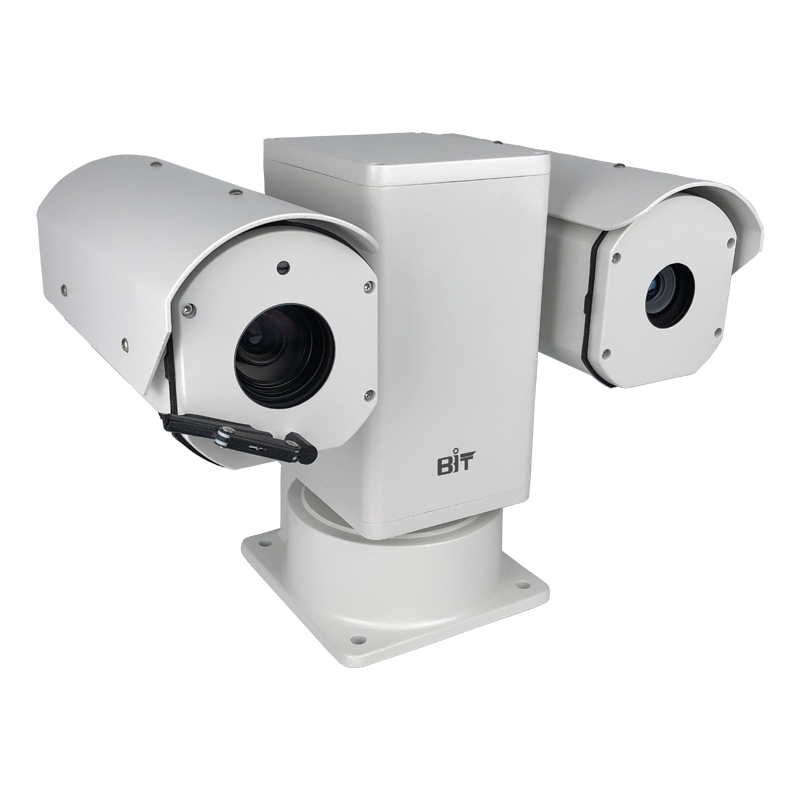
Understanding The Power Of Optical Zoom
Remember, we're talking about optical zoom, not digital zoom. Digital zoom is simply and roughly enlarging pixels, and the picture quality is basically pasted. However, optical zoom can keep the full resolution while narrowing the picture by physically adjusting the lens lens.
Whether you use the basic 4x or the telephoto 30x, the distance capability is a multiple of the difference. The most critical point in choosing the zoom ratio is to avoid the classic "novice pit": I bought a camera that can see a wide area clearly. As a result, I really wanted to enlarge the details and found that I could not provide usable pictures.
Short-Range Scene: Standard Configuration Of 4x Optical Zoom
For the typical residential or small commercial premises, a long-distance "cannon" is often a waste of budget. The 4x optical zoom is an engineering standard designed specifically for this type of environment.
4x zoom lenses are most effective at capturing specific details (such as a face or license plate number) within 50 feet (15 meters). This distance range is ideal:
Monitor front porch and private driveway.
Watch small retail counters or entrances and exits.
Covering the immediate perimeter of small businesses.
In these scenarios, our goal is not to see how far, but to get high-resolution real-hammer evidence in a relatively confined space.
Long Distance Monitoring: When Should I Go 20x To 30x?
Once the monitoring needs are transferred to a large-scale environment, such as a farm, an extensive parking lot or a long-distance driveway, the 4x is completely closed. To get evidence-level detail at these distances, you must upgrade to a 20x or 30x optical zoom model.
30x optical zoom can greatly extend your visual reach. It allows security operators to clearly identify the faces of strangers from 500 to 700 feet (150 to 200 meters) away in daylight. This ability is essential for the following scenarios:
Farms and ranches: Identify illegal intruders on the other side of the field.
Parking: Read license plates at a distance in a large commercial space.
Industrial Park: Remote monitoring of equipment or remote gates from the central building.
At this magnification, the role of the camera crosses the gap: it no longer just lets you know "there is someone over there', but lets you know exactly “who that person is”.
Vital Difference: Detection Vs. Identification
Detection: This means that the camera allows you to see a moving figure or object. You can tell that something is going on, but you can’t identify that person. A powerful high-end PTZ can detect movement from more than 3,000 feet away.
Identification: This refers to your ability to positively identify specific individuals or read text. Even on high-end commercial equipment, reliable identification distances are typically capped at 1,000 feet.
Therefore, when planning a security system, you must have a scale in mind: do you simply need to be awakened by an “alarm” (which allows great distances), or do you need to provide executable evidence for police reports (which requires you to be strictly limited to the effective recognition range of optical zoom)?
Author: Alex Morgan
“Hi, I’m a security technology specialist dedicated to testing surveillance systems. I focus on clarifying technical specs like optical zoom to help you understand exactly what a camera can capture. I hope to help you distinguish between simple motion detection and the detailed face identification required for true security.”



 English
 日本語
日本語 한국어
한국어 français
 Deutsch
 Español
 italiano
 русский
 português
 العربية
 tiếng việt
 ไทย
ไทย čeština
 dansk
dansk Svenska