In the field of professional industrial monitoring, when we talk about “Pan Tilt”, we are talking about the kind of reinforced electromechanical system, which is often called “locator” or “head” in engineering “. It has two core actions: Pan (horizontal azimuth, usually 0 to 360 degrees) and Tilt (vertical pitch angle, usually -90 to 90 degrees). The industrial Pan-Tilt Unit (PTU) is more like a strong universal base. Its existence value is to mount those heavy equipment-whether it is a telephoto laser lens, a thermal imager or a radar antenna. The core competitiveness of this thing lies in its absolute positioning accuracy and the dynamic coverage capability it can provide in key places such as borders and ports.
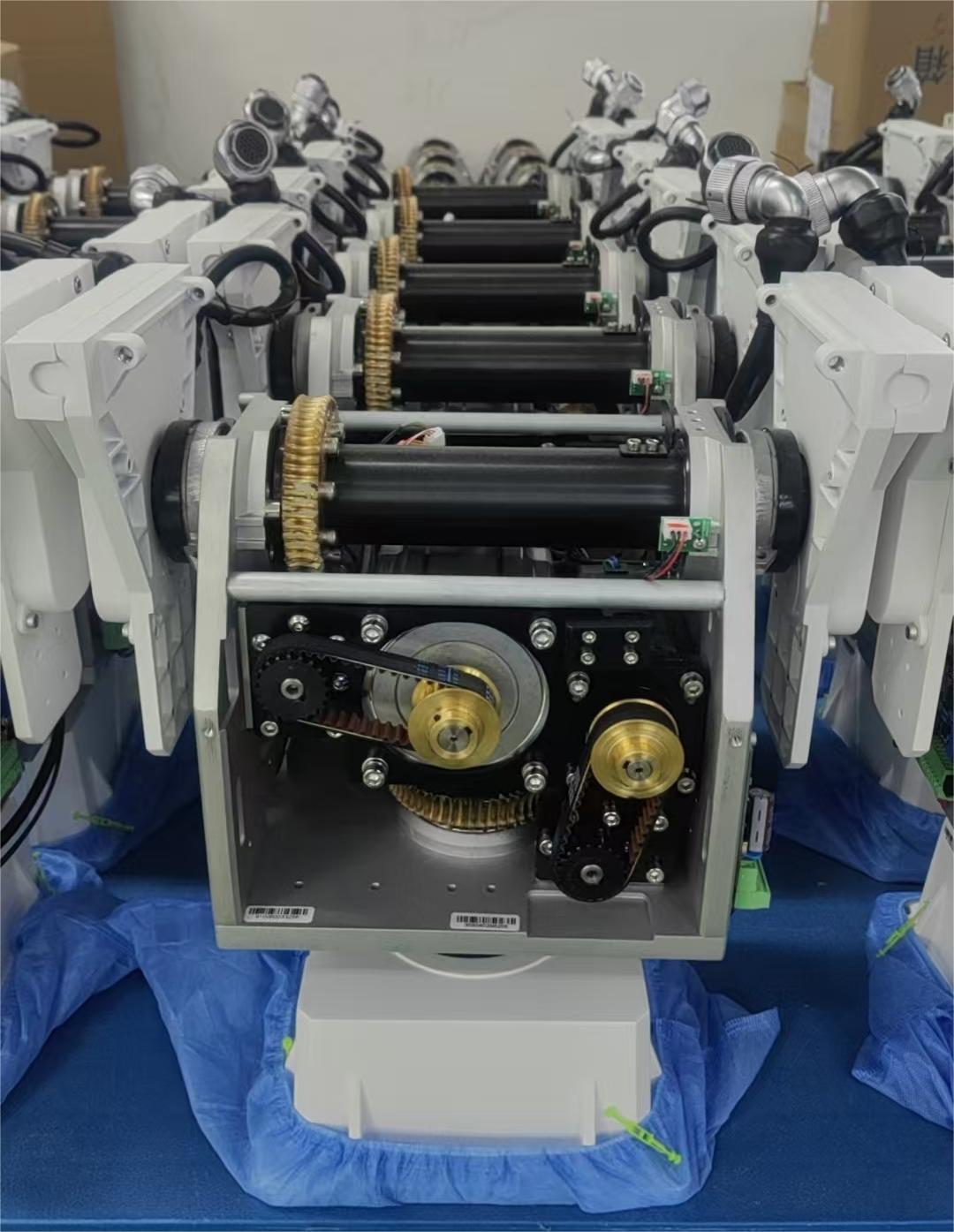
Mechanisms Of Motion: Azimuth And Pitch
To truly understand Pan Tilt from a technical level, one must look at its axis of motion. The so-called “Pan”, control is the horizontal movement, the term is called azimuth. In high-end security applications, this is more than just a matter of looking at an angle; such units usually use slip-ring technology in order to achieve 360-degree continuous rotation. This is very critical, because there must be no blind spots around the monitoring tower or the vehicle. “Tilt” controls the vertical movement, I .e. pitch. Anyone who has played with civilian equipment knows that their elevation angle is very limited, but the design standard for industrial tripod heads is usually to look directly below (-90 °) or even directly above (90 °). This is a hard indicator for tracking drones in the air, or checking the movement at the bottom of the installation structure. These two axes cooperate to provide a spherical coverage field of view that is completely unachievable with a static camera.
The PTZ As A “Platform”
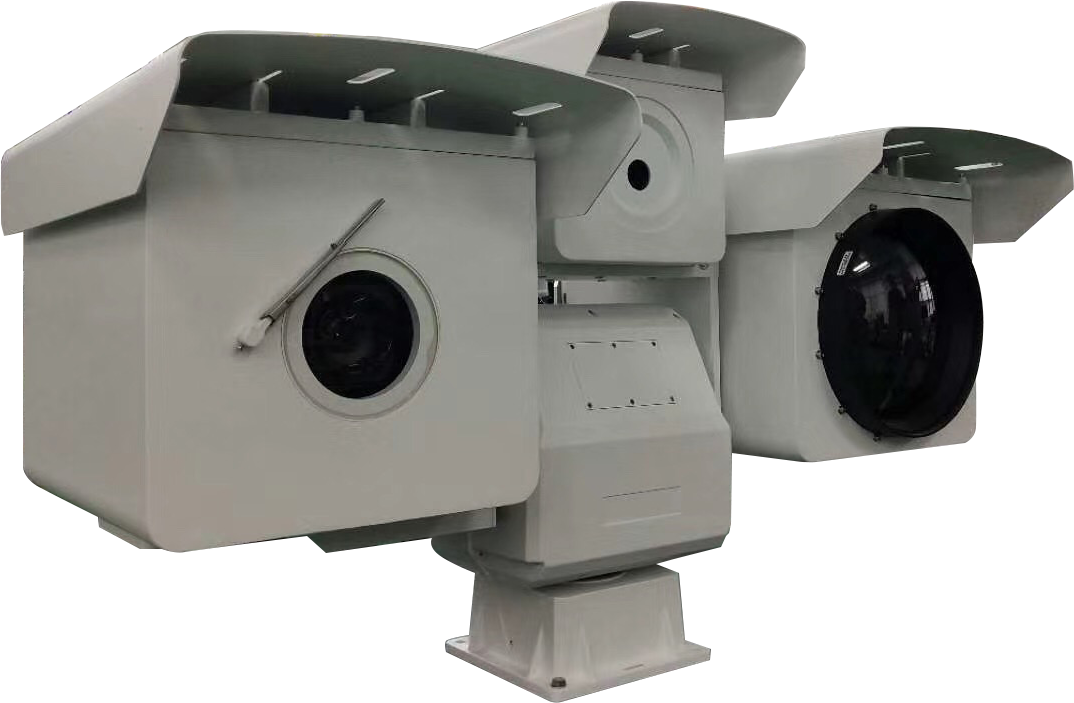
To define Pan Tilt in this context, there is a concept that must be clearly understood, that is payload. Many customers are easy to confuse this with the integrated PTZ ball machine, but in fact, the industrial head itself is an independent “electromechanical muscle”. It does not take pictures by itself, its task is to carry the equipment to take pictures. The essence of this design is extreme modularity. A heavy-duty PTZ locator can mount multiple sensors at the same time, such:
Tele Visible Camera: The kind of giant lens that can recognize targets several kilometers away.
Thermal imager: A cooled or uncooled sensor for night vision and heat detection.
Active sensors: laser rangefinders, illuminators and even directional acoustic wave devices.
Because they have to carry heavy objects, but also to resist wind load and salt spray corrosion, these guys are all “hard bones” made of aluminum alloy or stainless steel, and they are completely two species with plastic shells.
Precision And Application In Key Areas
For those of us who do system integration, the definition of Pan Tilt will eventually end up on “absolute positioning accuracy”. In places like border control or oil and gas fields, merely being able to rotate is not enough. The system must be able to provide real-time feedback on where it is pointing, so that it can be linked to radar or mapping software. In actual projects, we value these abilities:
Border control: once the ground radar detects the invasion, the coordinates will be sent to the gimbal immediately. The pan-tilt must instantly and accurately rotate to this coordinate to cut the target picture.
Maritime and Port: The PTU should not only prevent corrosion, but also stabilize the heavy thermal imaging camera in strong wind and vibration, otherwise it is impossible to monitor the channel.
Oil and gas facilities: In these hazardous areas, we must use explosion-proof gimbal. When monitoring leakage or fire, the surrounding gas must not be detonated by the spark generated by the motor itself.
To sum up, when we ask “what does pan tilt mean” in the security industry, it is not just an accessory, but a heavy-duty, high-precision robotic platform that is the cornerstone for carrying high-end sensors in the harshest environments on earth.
Author:David Vance
“I am a Senior Systems Integrator specializing in ruggedized surveillance solutions. With over a decade of experience deploying heavy-duty Pan-Tilt Units for border security and critical infrastructure, I focus on the technical mechanics of absolute positioning and multi-sensor payload integration to ensure precise dynamic coverage.”



 English
 日本語
日本語 한국어
한국어 français
 Deutsch
 Español
 italiano
 русский
 português
 العربية
 tiếng việt
 ไทย
ไทย čeština
 dansk
dansk Svenska